What Happens to Your Money If You Lose Your Phone Today?
Ifeoluwa Oyeniyi
10 November 2026 · 3 min read

You pat your pocket in traffic and it is not there. For about three seconds you are thinking about the phone itself. Then you think about everything inside it.
Most people have never worked out the answer to this one, which is strange, because it is far more likely than most of the things we do plan for.
The Phone Is Not Really the Problem
A locked phone is a locked phone. The part that matters is the SIM inside it, because that SIM is where your codes arrive.
Everything protecting your accounts assumes the person holding the line is you. Once somebody else is holding it, the thing standing between them and your accounts is whatever you set up beforehand, and that is the whole reason the first hour matters so much.
The First Hour
- Block the SIM before anything else
Not the phone, the SIM. Call your network, or use somebody else’s phone to reach them, and have the line barred. Everything else on this list is less urgent than this one, because this is where the codes are going. - Contact your bank and tell them what happened
Banks can restrict activity while you sort the rest out. Do this from a number they can confirm, and expect them to ask questions, which is them doing their job. - Change your email password from another device
Email first, before anything else, because email is usually the route back into everything else. Then the accounts that matter most. - Lock or wipe the device if you set that up
If you have ever turned on the find my device feature, now is when it earns its keep. If you have not, that is worth doing today rather than reading past it. - Tell your people
Your family, your colleagues, your savings group. Somebody with your phone can message the people who trust you, and the fastest protection is everybody knowing before a message arrives.
What Makes the Difference Is Done Beforehand
Everything above is recovery. The part that decides how bad the hour is was settled weeks earlier.
Turn on biometric login where it is offered
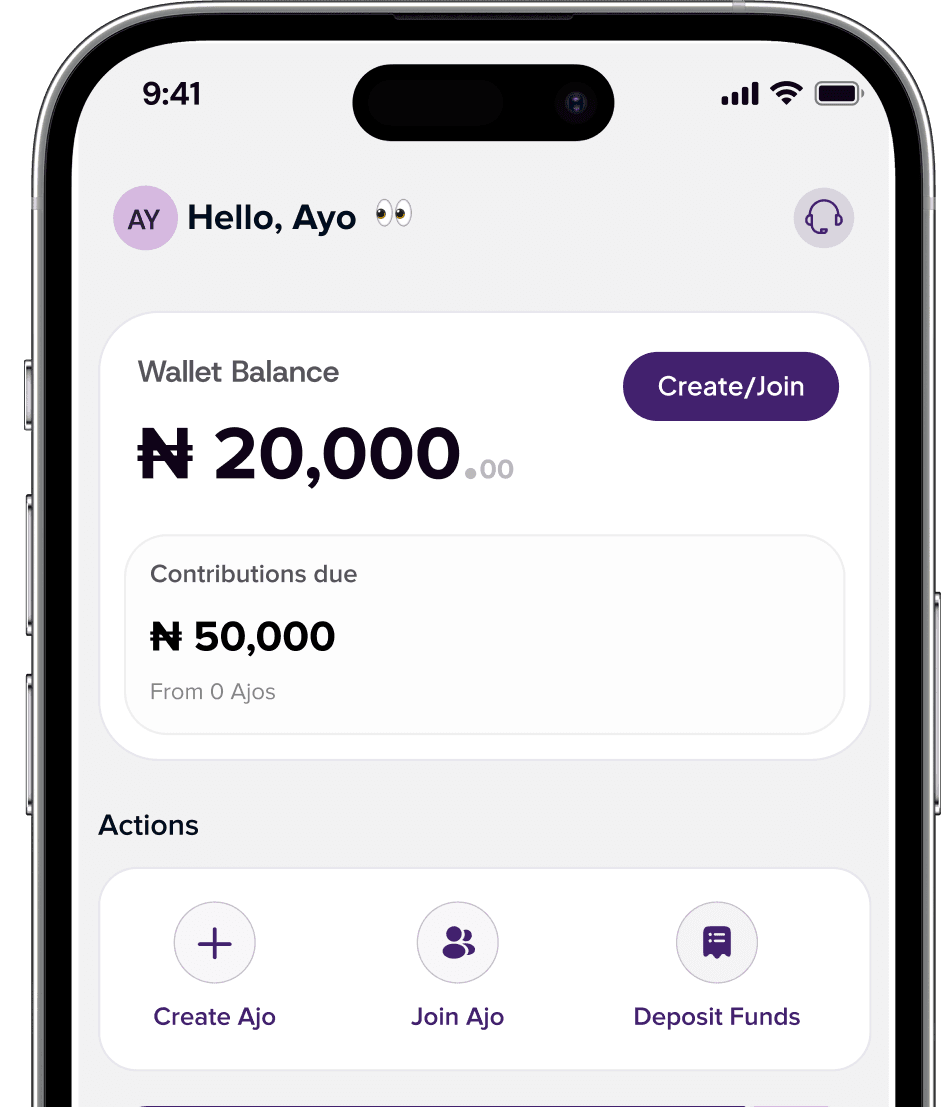
Your face or your fingerprint cannot be read off a screen, guessed from your birth year, or found written in your notes. On CircleFunds it is a setting, and it takes a minute.
Lock the device itself properly
A real passcode, not a year anybody who knows you could try. This is the layer everything else sits on.
Never keep PINs or passwords in your notes or your chats
This is the single most common way a lost phone becomes a lost account. If it is written in there, it is not a secret, it is a label.
Keep the essentials somewhere that is not the phone
Your bank’s support line, your account details, who is in your savings circle. Written down in one place at home, so losing the device does not also mean losing the information you need to fix it.
The Part That Applies to Your Circle
If you run a traditional ajo, ask where the record lives. Usually it is a notebook or one person’s phone, which means that if that phone goes, the record of who has paid what goes with it, and the circle has to reconstruct months of contributions from memory.
The same goes for the money. When one member is holding it in a personal account, their phone is the door to everybody’s contributions, not just their own.
On a platform, neither of those sits on a device. Contributions are held by the platform rather than by a member, the record exists independently of anybody’s handset, and members are verified, so a lost phone is a problem for one person to recover from rather than an emergency for the whole group.
Do the Two Minute Version Now
Turn on biometric login. Check that your device lock is something nobody could guess. Delete any password sitting in your notes.
None of it takes long, and all of it only works if it is done before the day you need it.
Download the CircleFunds app, turn on biometric sign in, and keep your savings somewhere that does not live on one device.