Is Ajo Safe? What Actually Goes Wrong In Ajo Groups
Ifeoluwa Oyeniyi
7 September 2026 · 2 min read
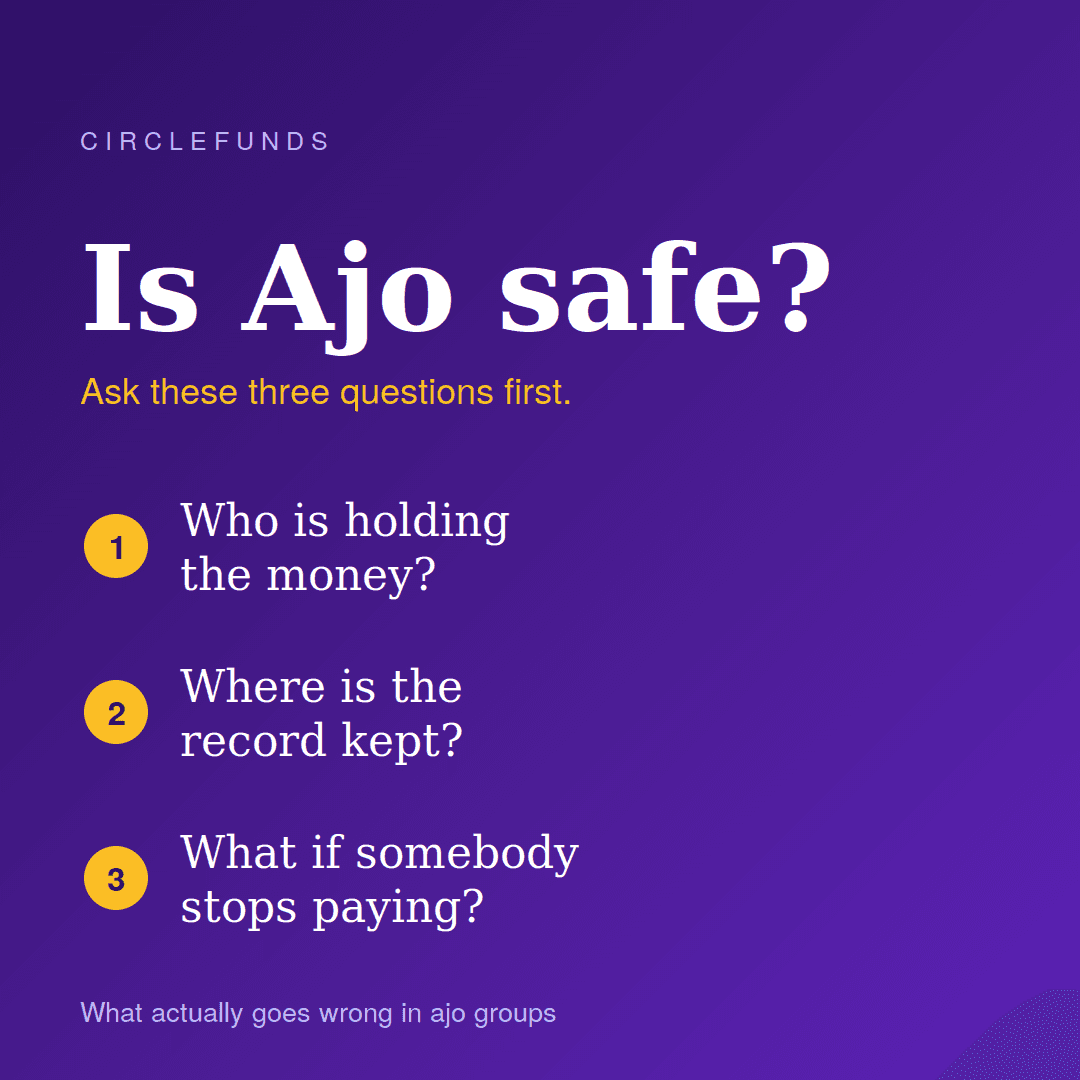
Ajo is safe when three things are handled: who holds the money, who keeps the record, and what happens when somebody stops contributing. Almost every ajo that collapses fails on one of those three, not on the idea itself.
Ajo has worked in Nigeria for generations. People contribute a fixed amount on an agreed schedule and collect the pooled sum in turn. The structure is sound. What has never been safe is the admin around it.
1. Somebody has to hold the money
In a traditional ajo, contributions sit with the alajo, usually in a personal account or a physical box. That person is now carrying other people’s money alongside their own, which means they have to be careful every time they spend anything.
It is also a reputational risk with no upside. If anything goes wrong, whether or not they caused it, they are the first suspect. Plenty of people have quietly refused to organise an ajo for exactly this reason.
2. The record lives in one place
One notebook, one phone, one person’s memory. This works perfectly until two members disagree about a month.
When there is nothing neutral to check, the disagreement stops being about facts and becomes about who the group believes. That is where ajo groups lose members and friendships at the same time.
3. Somebody defaults after collecting
This is the failure that does the most damage. A member takes their turn early and then stops contributing, which leaves everybody behind them exposed.
It is rarely theft. Usually the person set their contribution based on a good month and could not sustain it. The result is the same either way, and the people who have not collected yet carry the loss.
How to make an ajo safer
Agree everything in writing before the first contribution. The amount, the schedule and the collection order. Most disputes come from something assumed rather than agreed.
Set the amount by the lowest earner. A member straining to keep up in a slow month is your most likely default.
Take the record off one person. If every member can check the same record independently, there is nothing left to argue about.
Keep the money out of a personal account. This removes the suspicion and the pressure in one move.
Doing ajo online
Ajo apps exist to solve exactly these three problems. On CircleFunds, contributions and turns are tracked automatically, every member sees the same record on their own phone, and the funds do not sit in any individual’s account.
You can create a Private Thrift for your own group and invite the people you already save with, or join a Community Thrift if you want the structure without organising anybody. For money that has to stay untouched until a specific date, Target Savings locks it until then.
Every member is verified before they can participate, so the group is not held together by personal reputation alone.
The short answer
Ajo is as safe as its weakest arrangement. Run it on a notebook and a personal account and you are trusting memory and goodwill. Run it somewhere everybody can see the same record and nobody is holding the cash, and you keep everything that made ajo work for generations.
Download CircleFunds, verify your account, and create or join an ajo group this month.